
Builder gel is one of the things we are asked about most often at the desk, and usually in much the same way: someone has seen it on a friend’s hands, or been offered it somewhere without being told quite what it was. It is worth explaining properly, because it is one of the few things on a nail menu that is genuinely structural rather than decorative.
What builder gel actually is
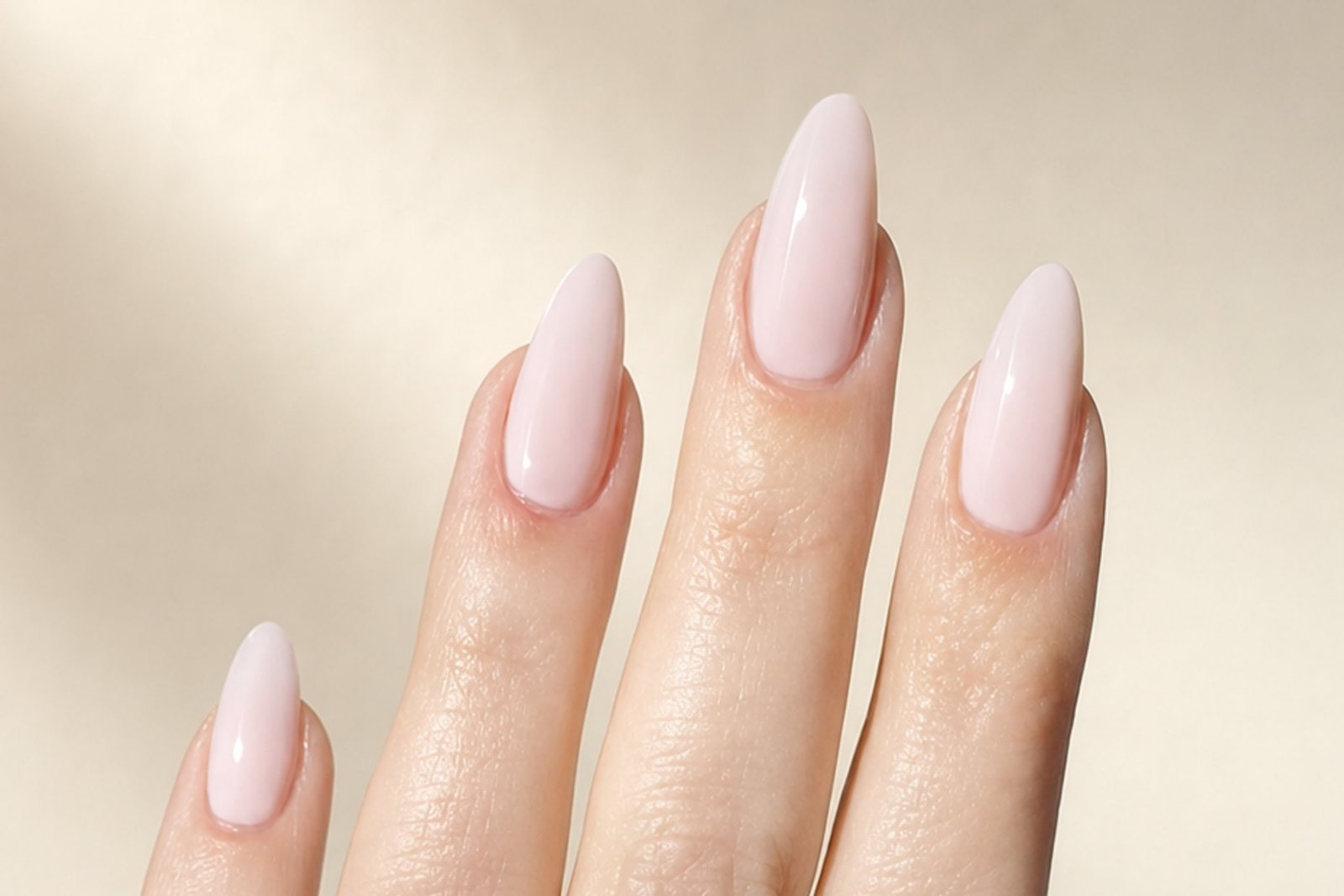
Builder gel is a thicker gel that cures under a lamp, laid over your own nail rather than in place of it. Where regular gel polish is a colour coat that sits on the surface, builder gel adds a layer with some substance to it — enough to change how the nail behaves.
That layer does three things. It adds thickness where the nail has gone thin, which is usually why someone is sitting down for it in the first place. It holds a split together so the crack stops travelling. And it gives polish a flat, solid surface to sit on, which is why a manicure over an overlay tends to keep its shine longer than the same polish on a bare nail.
Underneath all that, your own nail keeps growing. That is the part people generally miss: an overlay is not a replacement, it is a splint. If your nails split at the free edge every time they get past your fingertip, an overlay is what buys them the few weeks they need to get past it.
Builder gel and hard gel are not the same thing
Both cure under a lamp and both file down smoothly at a rebalance, but they behave differently once they are on.
Builder gel is more flexible. On a nail that already bends — thin, soft, peeling at the edges — that flex is what stops the overlay from lifting away from the nail plate every time your hands do something. Hard gel is more rigid, which is what you want when the nail needs real structure held in a shape, or where you are building length over a form or tip.
Neither one is better than the other; they simply suit different nails. Your technician will look at yours and suggest which fits, and will happily say so if neither is needed because your nails are already doing well on their own.
How it compares to the other things you have been offered
The comparison people usually want is against gel extensions, sometimes sold as soft-gel tips or gel-X. Those are pre-formed tips bonded onto the nail to add length. An overlay does not add length; it reinforces what you already have. If you want your nails longer than they currently grow, a tip or a form is what does that, and builder gel can be applied over it. If you want the nails you have to stop breaking, the overlay on its own is the answer.
Against acrylic, the practical difference is what it is like to sit through and what it does to the nail underneath. Acrylic is a powder and liquid mixed at the station, and it has a strong smell that lingers in a room. Builder gel and hard gel have no fumes to speak of and cure under lamp. We work with gels only, for both reasons.
What it is like to have done
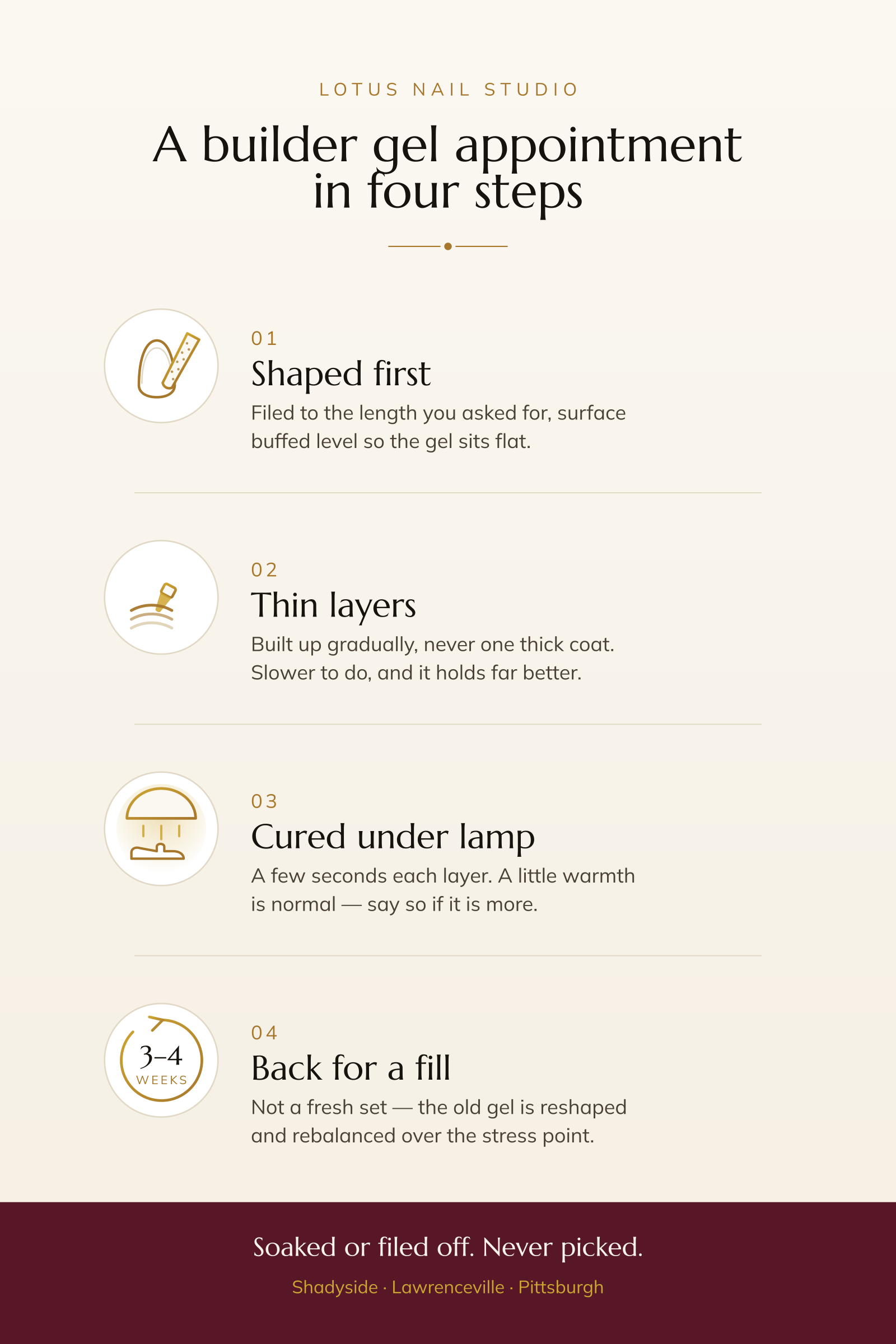
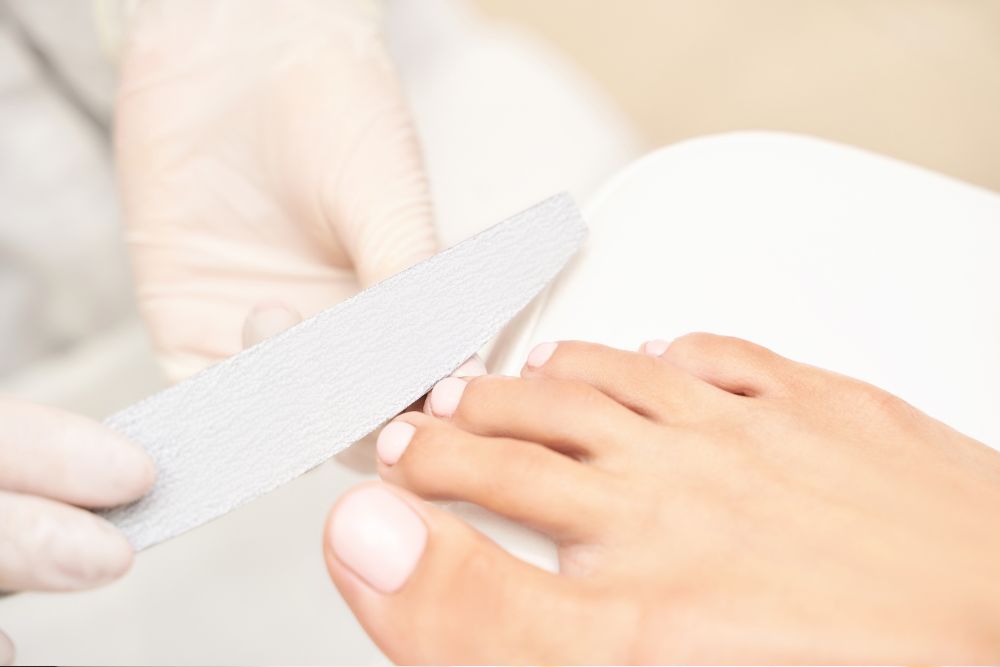
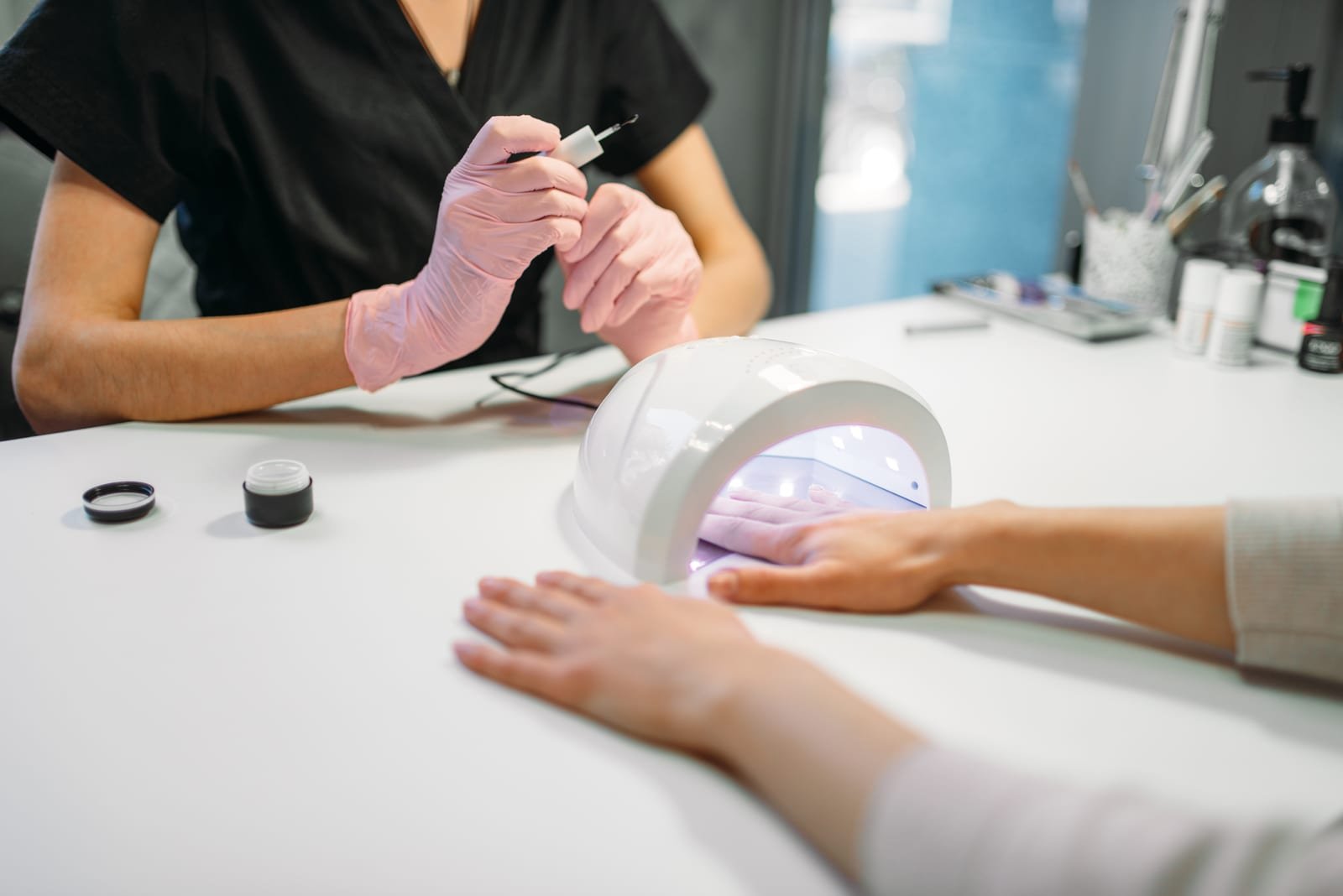
An overlay appointment runs one to two hours depending on how much work the nail needs first. The nail is shaped and the surface buffed level, cuticles softened and pushed back rather than cut away, and then the gel is applied thin and cured in layers rather than in one thick coat. Thin layers are slower and they hold better; a single heavy coat is where lifting starts.
You will feel warmth in the lamp on the first cure, particularly if your nails are thin. It passes in a few seconds. Tell your technician if it is more than that, because the fix is simply a lower-wattage cure, and there is no reason to sit through it.
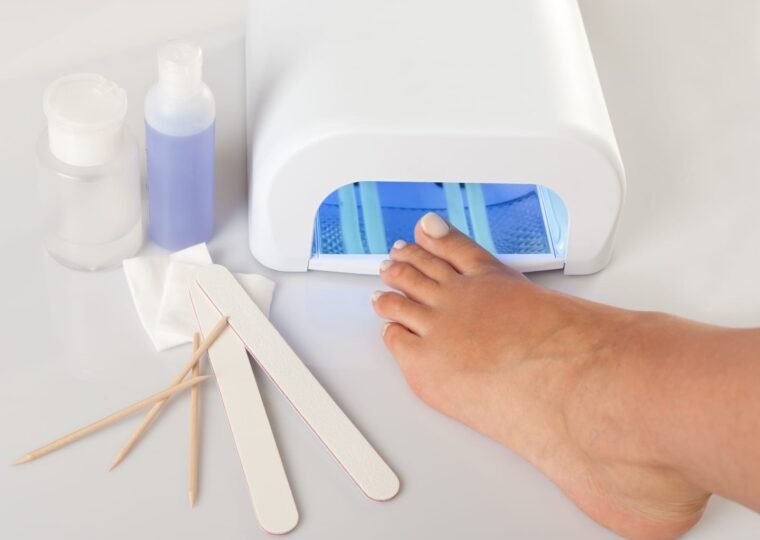
The lamp is UV, and the American Academy of Dermatology recommends putting a broad-spectrum SPF 30 or higher on your hands before a gel appointment, or wearing dark gloves with the fingertips cut off. It is a small thing and most salons never mention it. Ask us for sunscreen if you would rather not think about it — we would rather you asked.
Fills, and why the timing matters
An overlay needs rebalancing every three to four weeks. What is actually happening is that your nail has grown, so the overlay has moved forward with it and the balance point — the thickest part of the layer, which should sit over the stress point of the nail — has drifted past where it does any good.
A fill files the old product down, reshapes it, and lays new gel at the right place. It is not a fresh set, which is why it takes less time.
Leaving it much past four weeks is where problems start. The overlay is still there but it is no longer supported in the right place, so it acts as a lever instead of a splint, and that is when a nail breaks under it rather than because of it.
Taking it off
An overlay should be soaked or filed off rather than picked.
Picking one off feels like it is coming away cleanly, and it is not. The gel is bonded to the top layers of your nail plate, so what comes off in a piece takes some of the nail with it. That is where the thin, tender, slightly rough nail comes from afterwards, and it is also why people conclude that gel ruined their nails when what did the damage was the removal. The American Academy of Dermatology says the same thing plainly: picking or filing gel off can significantly damage the nail, and acetone is the way to take it off.
Filing down and soaking takes fifteen minutes in the chair and leaves the nail where it started. If you ever need to do it at home, soak only the fingertips rather than the whole hand — acetone is hard on the skin around the nail.
Looking after it between fills
Most of what shortens an overlay’s life happens at home rather than in the chair.
The most useful habit is oil. Cuticle oil worked into the skin around the nail once a day keeps the nail plate from drying out underneath the gel, and a nail that stays flexible is one the overlay stays bonded to. Dry nails go brittle, brittle nails move differently to the gel sitting on them, and the gap that opens between the two is where lifting begins.
Water matters too. Long soaks — washing up without gloves, a bath, a swim — let water work into any small gap at the edge. It will not destroy an overlay, but it will find a weakness sooner than dry hands would.
It is also worth being mindful about using your nails as tools — opening a can, scraping a label, prising something apart. An overlay is stronger than a natural nail, and that strength can make it easy to forget to be careful, which is often how one gets broken doing something you would not have risked before.
If a small chip or a lifted corner appears, it is worth booking in rather than filing it flat yourself. A lifted edge that gets sealed back down at a fill is a five-minute fix; the same edge left for two weeks lets moisture underneath and turns into a full removal and re-set.
Whether you need one at all
If your nails already grow past your fingertip and stay there, you probably do not. An overlay on a healthy nail is a way of keeping a manicure looking sharp for longer, which is a fine reason to have one, but it is a preference and not a repair.
If your nails split, peel in layers, or never quite make it past the tip before something takes a corner off, that is what this is for.
Either way, it is worth asking your technician which of the two it is before booking the longer appointment. Sometimes the honest answer is the cheaper one, and we would rather give you that one.
Where this comes from
How we work — which gels we use, how long an appointment runs, when a fill is due — is our own practice at Shadyside and Lawrenceville, and your technician is the person to ask about your nails specifically.
The general nail-health points above are not ours to assert, so here is where they come from:
- Gel manicures: tips for healthy nails — American Academy of Dermatology
- Dermatologist’s secret for removing gel nail polish at home — American Academy of Dermatology
It is worth knowing that the AAD also suggests keeping gel for special occasions rather than wearing it continuously, and leaving a week or two without polish between sets so the nail can recover. That is a fair thing to weigh up, and if your nails would benefit from a break, we would rather mention it than simply book you in.
One last thing, gently: if a nail is sore, discoloured, lifting away from the nail bed or changing shape, that is worth having looked at by a doctor rather than treated at a salon. We would always rather say so than work around it.
Want this done properly?
Book a service and tell us what your nails have been doing — we’ll adjust the prep.